
Resource Hub
A collection of books, communities and organisations I trust and return to. They have shaped my own practice, or are things I recommend to clients and families who are looking for language, community, or a deeper understanding of how neurodivergent minds work.
Books
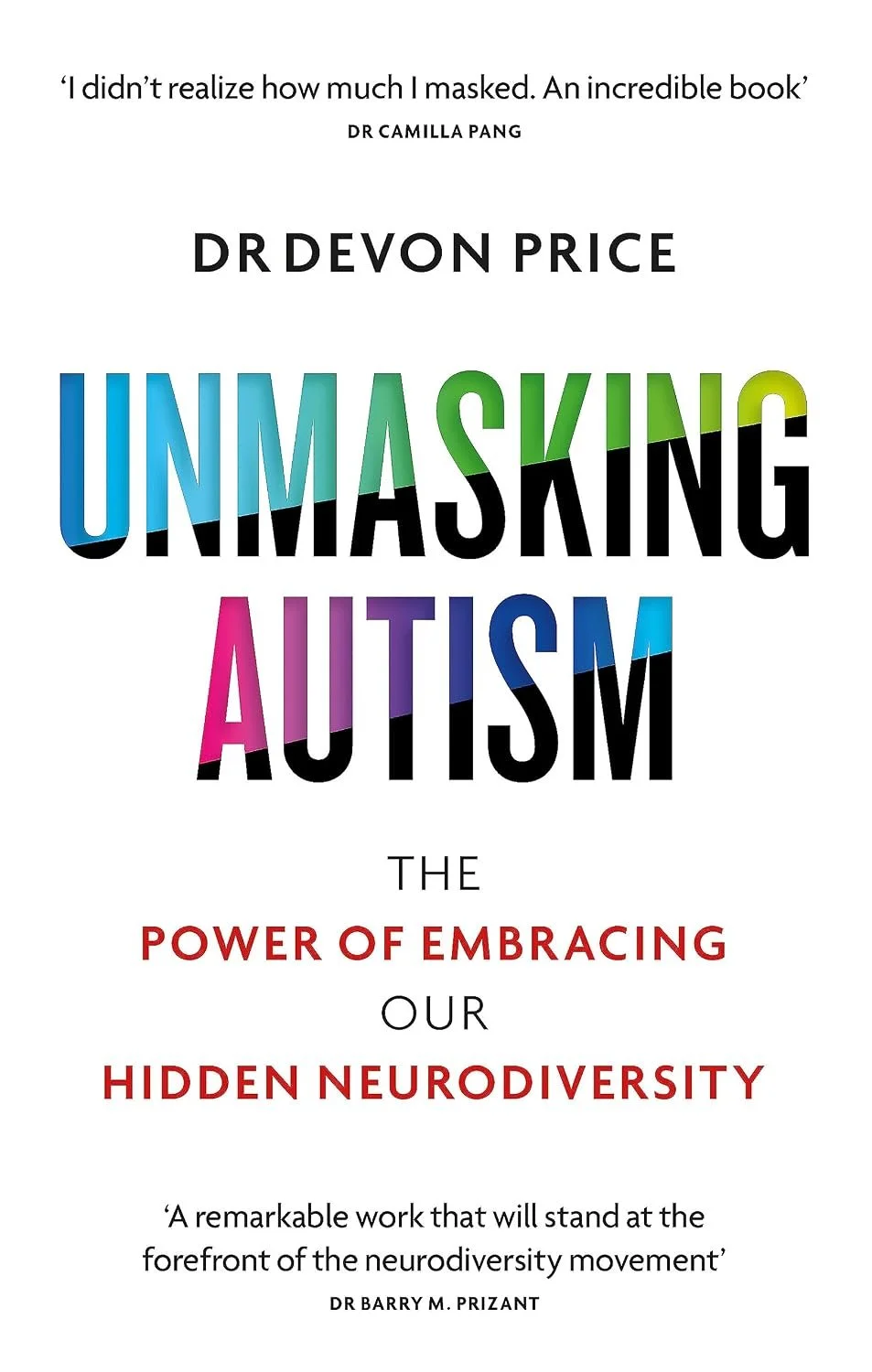
Unmasking Autism writes about autism from the inside out, especially for later-identified, higher-masking or more subtle presentations. Dr. Devon Price is a social psychologist and researcher, and discovered he was autistic as an adult, so you get a beautiful merge of academic rigour and the ability to describe, phenomenologically, what being autistic is actually like. He also interviews lots of other autistic people, so you get a kaleidoscope of different experiences. I often recommend it to parents of autistic kids, and especially to parents who might be autistic themselves but haven’t recognised it yet. It helps you understand the actual experience of being autistic, beyond a collection of symptoms in the DSM, and I find that once we understand it from that ground-up space, the mystery of what it means to be autistic starts to make a lot more sense.
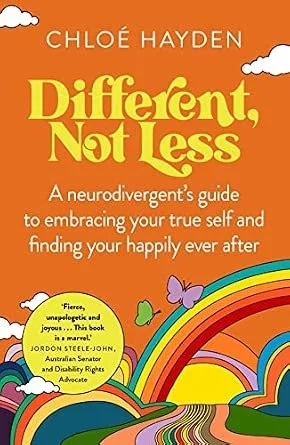
Different, Not Less is the book I hear about most from teenage girls, many of whom tell me it’s how they validated their own experiences, figured out they were autistic and sought an assessment. Chloé Hayden is an Australian actor and advocate who is also an AuDHD-er herself. Chloé has written this book the way a big sister would write to a little sister; it’s really easy to read and weaves beautiful storytelling with practical advice on everything from sensory needs, stimming and unmasking, to finding your tribe, “eye sparkles” (the glimmers that make you really happy), periods, dating and work. It’s also great for parents, who get to see what their daughter is going through from their point of view. A really beautiful book.
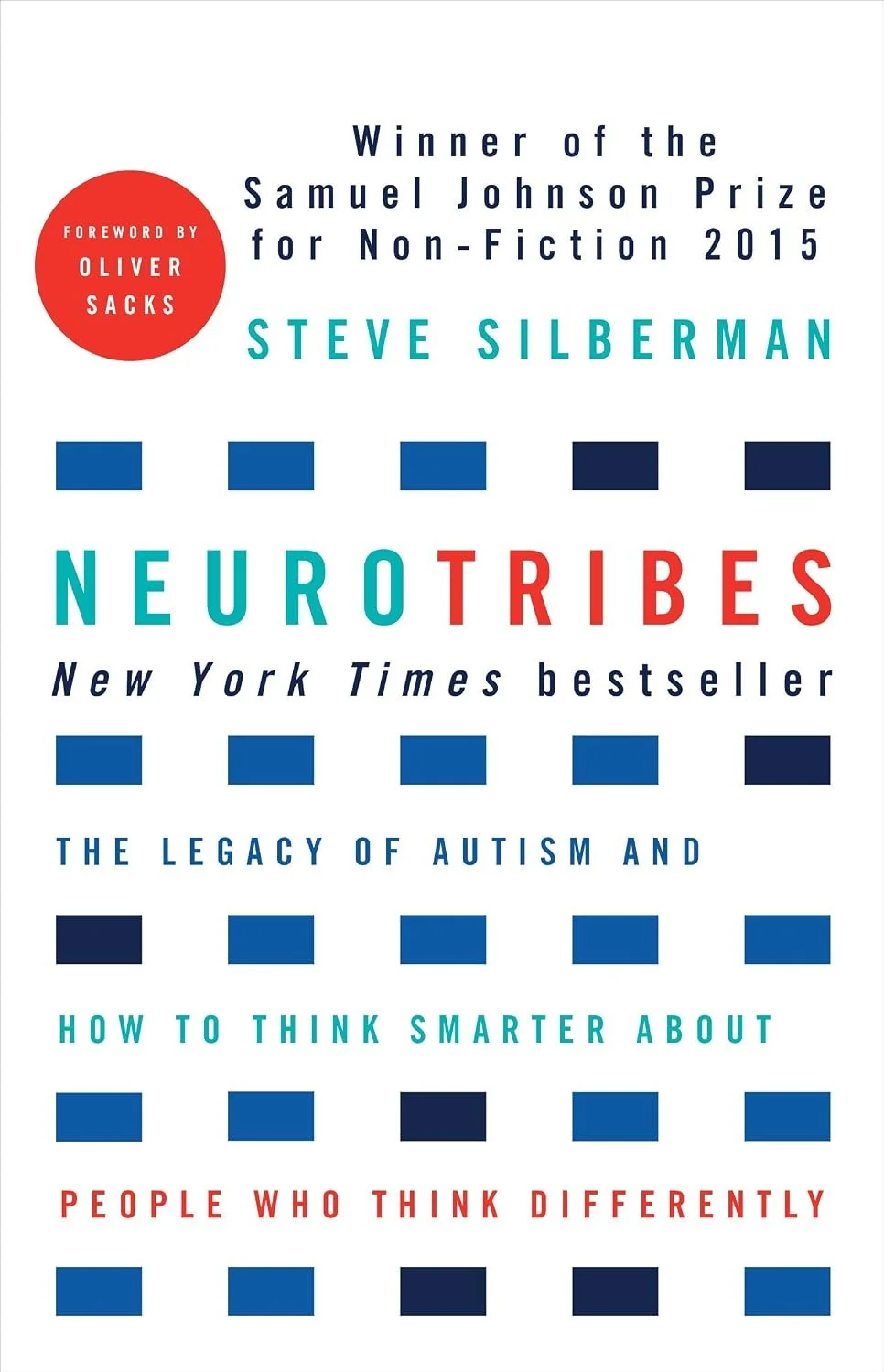
NeuroTribes was the first book about autism that deeply connected with me, validating the strengths-based, child-centred way I was experiencing my son’s autism. Steve Silberman is a science journalist who traces the history of why we see autism the way we do. He opens with Henry Cavendish, an 18th-century natural philosopher who may well have been autistic, before moving to the medical lens of Leo Kanner. From the very beginning, it sets out that autism has always had a place in the world and hasn’t always been pathologised. He also finds really beautiful stories from families along the way. He isn’t autistic himself, but the autistic community has kind of adopted him. It’s a beautiful ground-zero piece if you’re interested in why we have the medical model of autism and what the neurodiversity-affirming view is. I think it’s especially good for parents who want to make sense of it more and take that next step of seeing the context of why things are the way they are. Later editions have been updated to reflect newer research on Asperger’s Nazi-era history.
Organisations and Communities
Yellow Ladybugs is an Australian autistic-led, not-for-profit organisation that focuses on autistic girls, women and gender-diverse individuals, who they lovingly call their “Ladybugs.” They describe themselves as dedicated to the happiness, success and celebration of autistic girls, women and gender-diverse people. They offer lots of high-quality free resources, including articles, handouts and books for autistic people, alongside paid trainings and events. They also run Local Connect, which helps families and adults find and connect with each other. Every year they hold a conference centred on how we can best support their Ladybugs. I’ve attended online, and people I know who went in person say they really take wellbeing and sensory needs seriously. Very neurodiversity-affirming, really lovely, and such a phenomenal resource. It’s just good vibes.
Developmental Disability WA is a Western Australian not-for-profit that has supported people with developmental disabilities, including autism and intellectual disability, and their families since 1985. They’re fantastic and so supportive, yet not many people seem to know about them. They run low-cost workshops on topics like approaching adulthood, guardianship, wills and estate planning, and leaving school without a job. They also offer NDIS navigation, support coordination, advocacy, family peer support, and lots of free, easy-to-read resources and online learning, and membership is free. The workshops I’ve been to have been phenomenal. They understand the WA system and the NDIS so well, from how to word and frame things to all the niche services you didn’t realise existed or might need. If you’re stuck, they’re the hub I’d go to. If you’re in WA and have a child with higher support needs, this is absolutely a service you need to know about.

LOAPAC, the League of Autistic Psychologists and Affirming Colleagues, was founded by Yael Clark, a bit of a powerhouse in the Australian autistic advocacy space, who has done so much work to get it up and running. It now has a board, and it also cohosts and runs the Neurodiversity Affirming Therapy Conference Australia (NATCA). Joining as a professional involves a really rigorous application process, almost like writing an essay, where you have to demonstrate your understanding of neurodiversity and neurodiversity-affirming care. LOAPAC is still in its infancy, but the coolest thing on there is the Register of Affirming Psychologists (affectionately known as the RAP), a searchable list of LOAPAC psychologists – most of whom are autistic themselves – where you can find someone who feels like a good fit for you. You’ll find me on there too. Now that “neurodiversity-affirming” is becoming a bit of a buzzword, it’s reassuring that everyone on there has been highly vetted for their understanding of neurodiversity, and that neurodiversity is celebrated, not just tolerated. It’s a fantastic organisation to be part of, and if you’re looking for a psychologist who isn’t me, you’ll find someone there who specialises in what you need.
The Autism Books by Autistic Authors Project is a newer discovery for me, but it’s a really handy website for discovering books about autism written by autistic authors. It’s run by an autistic person with help from the community, and because the books come from autistic voices, you’re far less likely to get the medical model that pathologises autistic people as broken somehow. So many of the books are a celebration. You can search by topic, year or author, and there are also resources for autistic writers. It’s a really good place to go if you’re looking for the next thing you want to read.
Other clinicians and their work
The Little Black Duck is run by Melanie Martinelli, an Australian autistic PhD candidate and autism consultant. I first met Melanie at the inaugural Neurodiversity Affirming Therapy Conference Australia (NATCA), and her understanding of autism and ADHD is next level. The way she puts information together, so deeply, cohesively and coherently, is phenomenal, and she really is a bit of a hidden gem. Her website has lots of free articles and infographics that are more content-rich than a lot of the paid material I’ve seen elsewhere. Her work comes from the bottom up, from her own autistic experience, and it’s dense with information while always being trauma-informed. A graphic designer in a previous life, she gives everything a beautiful, cohesive look. As well as her free resources, she runs paid online workshops, and if you’re lucky enough to see her at a conference or expo, her resources are really worth buying. I have her autistic communication set, and the way she describes autistic communication is just beautiful. I can’t speak highly enough of her.
NeuroWild is Em Hammond, an Australian AuDHDer, speech pathologist, illustrator and mum to three neurodivergent kids. You might have already seen her cute illustrations making the rounds on social media. She has a real gift for making complex ideas, like the double empathy problem or why functioning labels cause harm, so easy to understand. She has paid resources and workshops too, but the free magic is on her Instagram (@neurowild). Follow her there for her beautifully illustrated, informative carousels.
Neurodivergent Insights is the website of Dr. Megan Anna Neff, a US-based AuDHD clinical psychologist, and it’s an absolute repository of information on many types of neurodivergence. What I love is that everything is built bottom up, from first principles rather than surface-level summaries, so it all feels deep, rich and thick. You’ve probably seen her Misdiagnosis Monday Venn diagrams circulating on social media, usually without credit to her. Her resources are really useful for clinicians and individuals alike. I send her clinician-licensed Autistic Burnout Workbook to a lot of my clients. It micro-slices what autistic burnout actually is, then walks through all the pieces that go into recovery, and it’s the most practical, thorough resource I’ve come across on the topic.

InterGifted is an international organisation founded and led by gifted adults, created by psychologist Jennifer Harvey Sallin. (I’m honestly not sure how I feel about the term “gifted,” but it’s the best word we have for it at this point.) They’re really good at helping people understand what giftedness is and the different frameworks for it, and at breaking down the idea that giftedness means superiority. If you don’t really know what giftedness is, or you suspect you or your child might be gifted, this is the website I link everyone to. Their blog is full of free information, and their “What is giftedness?” page is a really good place to start. They also have a podcast and courses.